
Quick Summary
- Learn how Illinois slot machine laws have evolved since 2009 and what they mean for your business today.
- Find out which establishments can legally host VGTs, how many machines are allowed, and what licensing is required.
- Get clear answers to common questions about hours of operation, age requirements, municipal restrictions, and Chicago’s upcoming VGT legalization.
- Understand what the Illinois Gaming Board (IGB) oversees–and your responsibilities as a licensed location.
Table of Contents
- A brief history of gambling in Illinois
- What Are Video Gaming Terminals (VGTs)?
- Are Slot Machines Legal in Illinois?
- Current Illinois VGT Laws and Regulations
- Who Can Host VGTs? Hosting Requirements
- Illinois Slot Machine Hours of Operation
- Are Slot Machines Legal in Chicago?
- Municipal Restrictions: Why Your City Matters
- FAQs About Illinois Video Gaming Laws
A brief history of gambling in Illinois
Illinois slot machine laws didn’t appear overnight. The state has a long and evolving relationship with gambling, and understanding that history helps explain why the rules are written the way they are today.
Gambling in Illinois dates back to the early 1800s, when the state was first formed. At the time, virtually all gambling was illegal, with activity limited to illegal riverboat operations and underground games. That began to change in 1990, when the Riverboat Gambling Act legalized casino-style gaming on boats and opened the door to video gambling in licensed settings.
The real turning point came in 2009, with the passage of the Illinois Video Gaming Act. That legislation authorized Video Gaming Terminals (VGTs in licensed retail establishments across the state–the slot machines you see in bars, restaurants, and truck stops today. The Illinois Gaming Board (IGB) was put in charge of regulating the entire program, and the distributed gaming industry has grown steadily ever since.
In 2019, Illinois amended its video gaming laws again with the passage of the Sports Wagering Act. That update brought several meaningful changes: the terminal tax increased, the maximum wager per play went up, the maximum single payout increased, and the number of VGTs allowed on-premises expanded for qualifying establishments. It also authorized VGTs at the Illinois and Du Quoin state fairs and introduced a new classification for “large” truck stops, which can now operate up to 10 terminals.
Today, Illinois is home to more than 42,000 VGTs across more than 7,000 licensed locations, making it one of the largest distributed gaming markets in the country.

What Are Video Gaming Terminals (VGTs)?
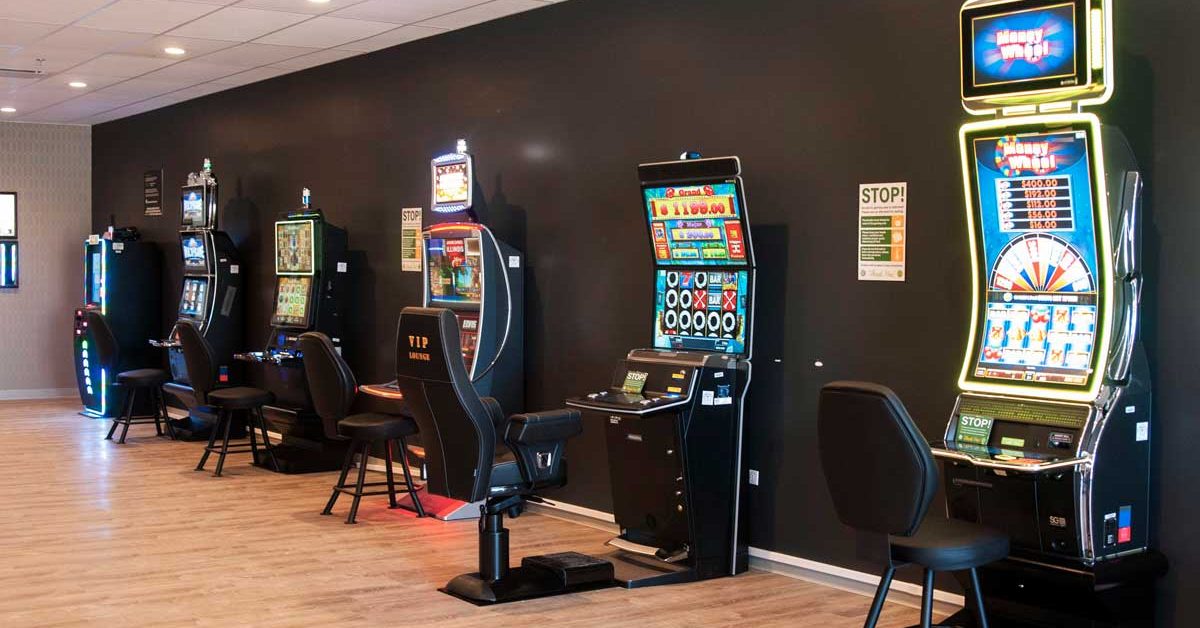
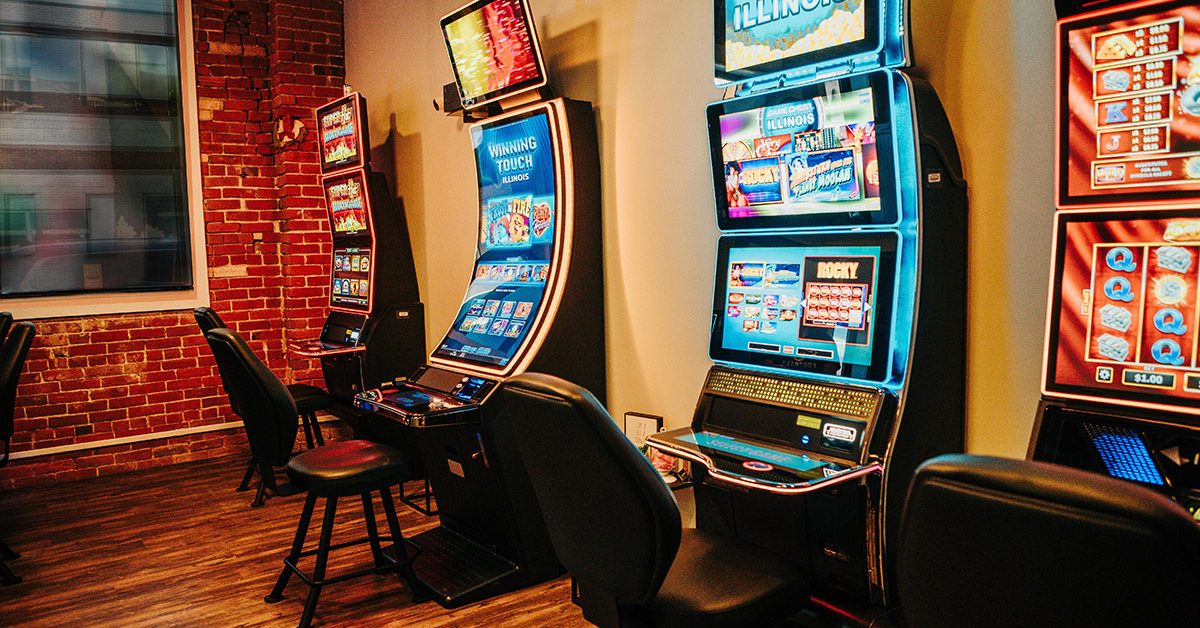
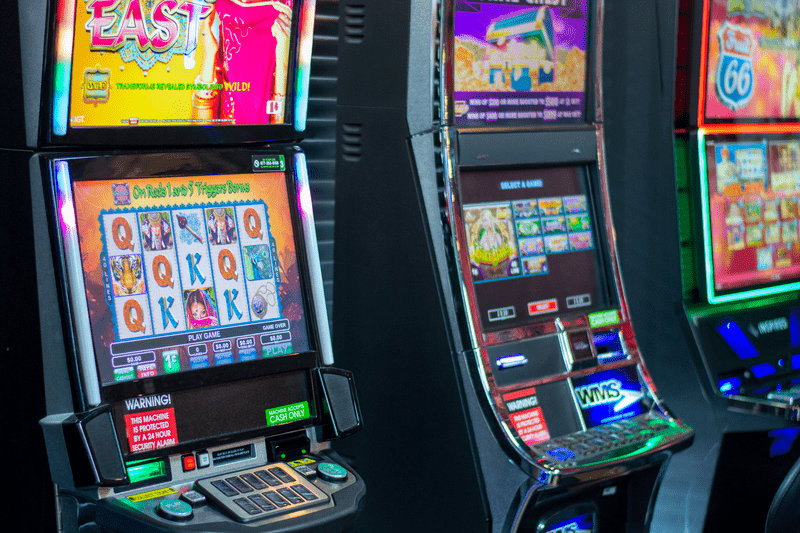
Video gaming terminals – often called video slots, slot machines, or just VGTs are electronic gaming machines found in bars, restaurants, truck stops, gaming cafés, and fraternal and veteran organizations throughout Illinois, among other businesses. They differ from casino slot machines in one important way: they are part of a distributed, state-regulated network, not a casino floor.
Most VGTs offer a choice of games, typically built around video poker, blackjack, and slot-style reel games. Players insert cash or a voucher, place their wager, and play. Unlike traditional slot machines, Illinois VGTs do not dispense coins or cash directly. Instead, winning players receive a printed receipt ticket, which they redeem for cash at the establishment.
All VGTs in Illinois are connected to the Central Communication System (CCS), a statewide network that allows the IGB to monitor every machine in real time. This is part of what makes the system so tightly regulated, and why compliance is taken seriously at every level of the industry.
Are Slot Machines Legal in Illinois?
Yes, slot machines are legal in Illinois, provided the establishment hosting them meets the requirements of the Illinois Video Gaming Act and holds a valid license from the Illinois Gaming Board.
It’s worth clarifying the terminology: what people commonly call “slot machines” in an Illinois bar or restaurant are technically Video Gaming Terminals (VGTs). These are fully legal forms of gambling in licensed establishments throughout the state. Other legal forms of gambling in Illinois include bingo, lotteries, pull tabs, jar games, charitable games, live poker, riverboat casinos, and sports betting.
Playing an unlicensed or illegal gaming machine, however, is a different matter entirely. If a VGT is being operated without proper IGB licensing, both the establishment and the player can face state and local prosecution.
Current Illinois VGT Laws and Regulations
The core framework governing Illinois video gaming comes from the Illinois Video Gaming Act (230 ILCS 40), which the IGB enforces and updates over time. Here are the key regulations every business owner and player should know:
Terminal limits: Most licensed establishments can operate up to 6 VGTs. Large truck stops that meet specific IGB criteria can operate up to 10 terminals.
Minimum wager: There is a minimum wager amount required to play on any Illinois VGT.
Maximum payout: The maximum single cash payout from an Illinois VGT is $500 per play. Progressive jackpots paid in increments can reach up to $10,000.
Age requirement: You must be 21 years of age or older to play a VGT in Illinois. No one under 21 may even enter a designated gaming area.
Staff monitoring: Every licensed gaming location is required to have at least one employee who is 21 or older monitoring the gaming area at all times. Surveillance systems do not replace this requirement.
Gaming area separation: VGT areas must be physically separated from areas where minors are present, with a barrier such as a partition, gate, or stanchion. Establishments that are 21+ only throughout do not need a separate gaming area.
Licensing: The establishment (location), the Terminal Operator, and any individual servicing VGTs must all hold valid licenses from the IGB. Only Licensed Terminal Handlers may perform maintenance or repairs on VGTs.
Proximity restrictions: VGTs may not be placed within 1,000 feet of a racetrack or riverboat casino, or within 100 feet of a school or place of worship.
Who Can Host VGTs? Illinois Hosting Requirements
Not every business qualifies to host video gaming terminals. Illinois law currently permits VGTs in the following types of establishments:
- Bars and taverns with a valid liquor pouring license
- Restaurants licensed to serve alcohol on-premises
- Truck stops that meet IGB-defined criteria (fuel sales, parking, scale requirements, etc.)
- Large truck stops meeting additional criteria for up to 10 terminals
- Gas stations that qualify as truck stops under IGB definitions
- Fraternal organizations (such as Elks, Moose, VFW)
- Veteran’s organizations
- Gaming cafés (dedicated video gaming establishments)
- State fairgrounds (Illinois and Du Quoin state fairs, authorized since 2019)
To host VGTs, an establishment must hold a valid Illinois Gaming License issued by the IGB, maintain a valid liquor license (for most establishment types), and have a signed Use Agreement with a Licensed Terminal Operator. VGT revenue accounts must be kept separate from all other business finances, and gaming areas must comply with all IGB specifications.
It’s also important to note that local municipalities have the authority to add their own requirements on top of state law. Some cities cap the number of licensed locations, require additional fees per terminal, or impose operating hour restrictions beyond what the state mandates. Always check with your municipality before applying.
Illinois Slot Machine Hours of Operation
One of the most frequently asked questions about Illinois VGTs is: what time do slot machines turn on, and when do they shut off?
The answer depends on the type of establishment:
Bars, restaurants, and most licensed locations: VGTs can only operate during the hours your establishment is authorized to serve liquor under your local liquor license. This varies by municipality. In many Illinois cities and towns, that means machines are off in the early morning hours–typically between 2 a.m. and some point later in the morning, depending on local ordinance. There is no single statewide “turn-on time.”
Truck stops and gas stations: Certified truck stops that do not operate under a liquor license are permitted to run their VGTs 24 hours a day, 7 days a week. This is one of the key advantages of a truck stop classification and one reason those locations can significantly outperform bars and restaurants in monthly gaming revenue.
If you’re a player wondering what time slots open at a specific bar or gas station near you, the best approach is to check with that location directly. Hours vary based on their specific liquor license and any local ordinances in effect.
Are Slot Machines Legal in Chicago?
This is one of the most searched questions about Illinois video gaming. And the answer is changing.
For most of the history of Illinois’ VGT program, Chicago opted out. The Illinois Gaming Board (IGB) has officially switched its status for Chicago to an “opted in City”, meaning that applications for video gaming licenses can now be submitted for Chicago bars and restaurants. This is an enormous market untapped for Terminal Operators and establishment owners alike, representing one of the biggest potential growth opportunities in the history of Illinois video gaming Hundreds of bars, restaurants, and other eligible locations that have never had access to VGT revenue will soon be able to participate.
For Chicago establishment owners, now is the time to get familiar with the licensing process and start exploring Terminal Operator partnerships, so you’re ready when the doors open. Universal Gaming Group is already positioned to help Chicago businesses get set up from day one.
Municipal Restrictions: Why Your City Matters
Under Illinois law, every municipality has the right to allow or prohibit video gaming within its borders. This means Illinois slot machine laws aren’t uniform statewide. Your city or village has the final say on whether VGTs are permitted at all, and may layer on additional restrictions even if they do allow them.
Some municipalities cap the total number of gaming licenses they’ll issue. Others restrict operating hours, limit the number of terminals per establishment below the state maximum, charge local licensing fees, or impose specific zoning requirements. Bloomington, for example, limits licensed establishments to 5 terminals (below the state maximum of 6) and caps the total number of active gaming licenses in the city at 75.
Before applying for a gaming license or entering into a Terminal Operator agreement, always verify your municipality’s specific rules on the IGB website or directly with your city clerk. Universal Gaming Group helps prospective partners research municipal eligibility as part of our licensing support process.
FAQs About Illinois Video Gaming Laws
Are slot machines legal in Illinois bars and restaurants? Yes. Bars, restaurants, and other liquor-pouring establishments can legally operate VGTs in Illinois, provided they hold a valid Illinois Gaming License and have a signed Use Agreement with a Licensed Terminal Operator.
Are slot machines legal at gas stations in Illinois? Yes but only if the gas station qualifies as a “truck stop” under IGB criteria. Not every gas station qualifies. Requirements include minimum fuel sales volumes, truck parking capacity, and other specifications. Qualifying locations can operate up to 6 VGTs, and large truck stops up to 10.
What time do slot machines turn on in Illinois? For most locations, VGTs operate during the same hours the establishment is licensed to serve alcohol. There is no statewide uniform schedule–hours are tied to your local liquor license and municipality. Truck stops operating 24/7 without a liquor license can run VGTs around the clock.
How old do you have to be to play slot machines in Illinois? You must be 21 years or older to play any VGT in Illinois. Anyone under 21 is not permitted in the designated gaming area, regardless of whether they intend to play.
Does every video gaming business need a Terminal Operator agreement? Yes. A licensed video gaming location must have a signed Use Agreement with a Licensed Terminal Operator before any VGTs can be placed in the establishment. The Terminal Operator owns the machines, handles installation, maintenance, and compliance.
Can I perform repairs on my own VGTs? No. Under Illinois video gaming regulations, only Licensed Terminal Handlers are authorized to perform maintenance or repair work on VGTs. Attempting unauthorized repairs puts your gaming license at risk. Contact your Terminal Operator whenever a machine needs attention.
How much can I earn from slot machines in Illinois? Revenue varies by location, traffic, hours, and number of machines. Based on Illinois Gaming Board data, the average establishment earned more than $104,000 in gross gaming revenue in 2023, with April 2024 showing averages of over $9,300 per month per location. After state taxes and the Terminal Operator’s share, most licensed locations retain approximately 32% of Net Terminal Income.
What happens if I forget to renew my gaming license? If you fail to pay your annual renewal fee before the expiration date, your VGTs will be shut off immediately. You have 10 business days following expiration to pay and have machines restored without reapplying. After that window, you’ll need to go through the full application process again.
Is video gaming legal in Chicago? Chicago is actively moving toward legalization. Establishment owners in Chicago should begin exploring the licensing process and Terminal Operator options now to be ready when the program launches.
Who regulates video gaming in Illinois? The Illinois Gaming Board (IGB) is the state agency responsible for licensing, regulation, and enforcement of all video gaming activity in Illinois. All VGTs are connected to the IGB’s Central Communication System (CCS) for real-time monitoring.